 how-to
How to Find Local Metal Building Contractors
Table of Contents
- Start Your Search for Local Metal Building Contractors
- Questions to Ask a Metal Building Contractor
- Metal Building Contractor Checklist: Verify Credentials
- Metal Building Site Preparation and Permits
- Metal Building Installation Timeline: What to Expect
- Comparing Quotes and Evaluating Bids
- Red Flags: When to Walk Away
- Frequently Asked Questions
Last Updated: October 12, 2026
Start Your Search for Local Metal Building Contractors
Choosing the right local metal building contractor determines whether your project stays on schedule, meets your budget, and delivers the quality you expect.
Direct Southern Metal Buildings serves homeowners and business owners across Arkansas, Kansas, Louisiana, Mississippi, Missouri, and Oklahoma who need custom metal buildings, garages, workshops, and agricultural structures. When searching for local metal building contractors, start by identifying what you need built, a residential garage, commercial warehouse, or agricultural barn, since your building type shapes which contractors have relevant experience and equipment.
Ask local builders, real estate professionals, and business owners for referrals, word-of-mouth often leads to contractors proven on similar projects. You can also search online for metal building contractors near you, but verify credentials first by checking websites for portfolio images, service areas, and reviews.
Questions to Ask a Metal Building Contractor
Before hiring anyone, ask questions that reveal their experience, capabilities, and approach.
Start with fundamentals: How long have you installed metal buildings? Do you handle the entire process from design through installation, or outsource parts? Can you provide references from customers who built similar structures in the last two years?
Ask about their workflow: How do they handle design? Will they work with your architect or engineer? Do they offer 3D renderings or consultations before you commit? Understanding their design process shows whether they'll truly customize the building to your property and needs.
Design and Customization Capabilities
Metal buildings aren't one-size-fits-all. A quality contractor should customize size, roof pitch, door placement, window locations, and color to match your specifications and property constraints.
Ask: Can you work with odd-shaped lots or unusual property lines? Do you offer design modifications after the initial proposal? Can you adjust dimensions during the design phase? Can you accommodate future expansions?
Direct Southern Metal Buildings specializes in customizable designs that work around your property layout and budget, so your building fits your actual needs rather than a standard template.
Experience with Your Building Type
Different building types require different expertise, a contractor experienced in residential garages may lack knowledge for agricultural barns or commercial warehouses. Ask: What types have you installed most frequently? Do you have experience with [your specific building type]? Can you show photos of similar completed projects?
For a barndominium shell, ask about residential conversions or hybrid structures. For a commercial warehouse, verify they understand commercial-grade specifications and load requirements. Agricultural contractors should know ventilation, drainage, and equipment access for farm buildings.
Metal Building Contractor Checklist: Verify Credentials
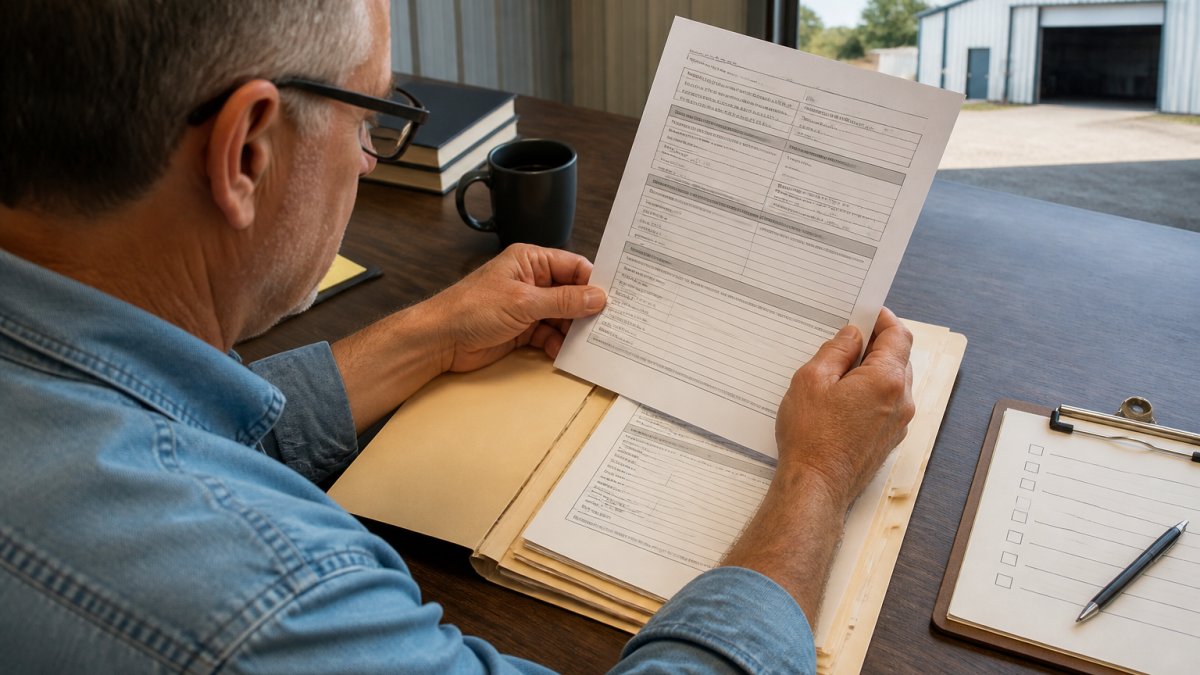
Before signing a contract, verify your contractor's licenses, insurance, and track record. This is the step most property owners rush, and the one that most often determines whether a project ends well. The checklist below covers each credential and how to confirm it yourself.
License and Insurance Requirements
Every legitimate contractor should carry a valid state business license and current liability insurance. Ask for proof of both, then verify independently.
How to verify a license: Get the license number in writing, then look it up through your state's contractor licensing board.
How to verify insurance: Request a certificate of insurance (COI) directly from the contractor's insurance agent, not the contractor. It should list general liability and, if they have employees, workers' compensation coverage.
How to verify a bond: If a performance bond is part of your agreement, request a copy and confirm it with the issuing surety company. A performance bond guarantees completion, if the contractor abandons the project, the bonding company covers the cost to finish (Surety bonds).
References, Completed Projects, and Workmanship Checks
Request at least three references from customers with similar projects completed in the last two years, recent projects reflect the contractor's current crew, suppliers, and processes.
Ask references specific questions: Did the contractor finish on schedule? Were there unexpected costs, and how were change orders handled? Did the crew show up consistently? Would you hire them again? Were punch-list items addressed promptly?
When possible, ask for addresses of two or three completed projects you can drive past. From the street, check whether panels are straight, trim is aligned, the roof is free of waves or oil-canning, and the foundation line is clean.
Check reviews on Google, the Better Business Bureau, and industry directories. Look for patterns rather than single incidents, multiple complaints about the same issue (delays, communication, change-order disputes) suggest a real problem. A measured, specific response to negative reviews is a better sign than a defensive one.
Metal Building Site Preparation and Permits
Your contractor should guide you through site preparation and permitting, but understand what's involved so you can spot gaps before they become expensive. Local requirements vary widely, and site conditions and zoning most often surprise property owners.
Site Preparation: What to Confirm Before Work Starts
Site preparation includes clearing and leveling the ground, ensuring drainage, and preparing the foundation. Scope depends on your lot, so ask your contractor to walk the property with you and identify what's needed.
Key questions to ask:
- What site preparation does my property need, and will you handle it or will I need to hire a separate excavation company?
- How will you handle drainage so water moves away from the building and foundation?
- What soil conditions could affect the foundation, and will you require a soil test or geotechnical report?
- Is there a slope, and if so, how will you address cut and fill?
- Are there utilities, septic lines, or easements that affect where the building can go?
Foundation and site work are the largest sources of unexpected cost. Ask your contractor to separate site preparation and foundation costs from the building package so you can see what's included. If excavation, grading, or concrete is excluded, get separate quotes so you compare complete project costs.
Permits, Zoning, and Building Codes
Most jurisdictions require permits before construction. Your contractor should explain what's needed and whether they handle the application process or you do.
Start by contacting your local building department and zoning office. Ask these questions:
- What permits are required for a metal building of my size and use?
- What are the setback requirements from property lines, roads, and other structures?
- Are there height restrictions or lot coverage limits?
- Is my intended use allowed in this zoning district, and do I need a conditional use permit or variance?
- Are there separate requirements for agricultural, commercial, or residential accessory buildings?
- What inspections are required during construction, and at what stages?
Building codes vary by location, and metal buildings fall under specific provisions in the International Building Code and International Residential Code that many jurisdictions adopt with local amendments. Your contractor should know the codes for your building type and explain how the design meets them. Agricultural, commercial, and residential projects may follow different code paths, and agricultural exemptions vary by state and county.
Ask your contractor: What permits are required? How long does the process take? Will permitting delays affect the timeline? Who schedules inspections? A knowledgeable contractor anticipates these requirements rather than discovering them mid-project.
Metal Building Installation Timeline: What to Expect
Understanding the installation timeline helps you plan around the construction schedule.
Timelines depend on building size, complexity, weather, and permit approval. A small garage might take two to four weeks; a large commercial or agricultural structure could take two to three months or longer.
Break the timeline into phases: design and permitting, site preparation, foundation, steel erection, roofing, and finishing. Ask for a detailed schedule showing when each phase begins and ends, plus what could delay the project, how weather affects the timeline, and whether they have a contingency plan.
Weather plays a significant role, rain, snow, and extreme heat can slow work. Ask whether your contractor works year-round or pauses seasonally so you can schedule appropriately.
Comparing Quotes and Evaluating Bids
Get multiple quotes and compare not just price, but scope, timeline, and what's included.
Make sure quotes are comparable, one might include site preparation and foundation work while another doesn't, or include design services another charges separately for. Ask each contractor: What exactly is included? What's not? Are there any costs not listed?
Look for itemized breakdowns showing materials, labor, site preparation, permits, and other charges separately, this transparency helps you identify unusual costs.
Compare payment terms, some ask for a deposit upfront, progress payments during installation, and a final payment on completion. Understand the schedule before you commit.
| Comparison Factor | What to Evaluate | Red Flag |
|---|---|---|
| Scope of Work | Detailed breakdown of what's included | Vague descriptions or missing items |
| Timeline | Realistic phases with contingency | Unrealistic speed or no detail |
| Payment Terms | Clear deposit, progress, and final payment | Requests for full payment upfront |
| References | Recent projects, responsive customers | Unwilling to provide references |
| Licensing & Insurance | Current and verified | Missing or outdated documentation |
Be cautious of quotes significantly lower than others, that price may reflect corner-cutting on materials, skipped site preparation, or inexperienced labor. A much higher quote may include premium services you don't need. Aim for fair pricing on quality work, not the lowest bid.
Red Flags: When to Walk Away
Some warning signs indicate you should find a different contractor.
If a contractor refuses to provide references, insurance documentation, or license information, walk away, legitimate contractors willingly verify their credentials.
Pressure to decide quickly or demands for full payment upfront are red flags. Reputable contractors give you time and use standard payment schedules tied to milestones.
If the contractor can't clearly explain the design process, timeline, or quote inclusions, they may lack experience or organization.
If a contractor dismisses concerns about customization, site-specific challenges, or your building type, they're not listening.
Poor communication, missed appointments, or vague answers during the initial consultation will likely continue throughout the project. Choose a contractor who responds promptly and communicates clearly.
Finding the right local metal building contractor requires research, verification, and careful comparison. Take time to ask the right questions, verify credentials, and compare multiple quotes.
Frequently Asked Questions
How do I find a reputable metal building contractor in my area?
Start by asking for referrals from local builders, checking online directories, and searching for contractors specializing in metal buildings in your region. Verify their license, insurance, and bonding status through your state's licensing board. Request references from recent projects and contact previous customers to confirm quality and reliability. A reputable contractor will have a portfolio of completed work and clear communication about their process and timeline.
What should I ask a metal building contractor before hiring?
Ask about their experience with your specific building type, whether they handle design customization, who manages permits and site preparation, what the installation timeline looks like, and whether they provide warranty coverage. Request a detailed written proposal that itemizes all costs and specifies materials, labor, and delivery. Ask for references and examples of similar projects. Clarify payment terms, whether they handle financing, and what happens if you need future expansions.
How long does metal building installation typically take?
Installation timelines vary based on building size, complexity, weather, and site conditions. Most metal building projects take 4-12 weeks from design approval to completion, though smaller structures like garages or workshops may finish faster. The contractor should provide a detailed timeline that includes design finalization, permitting, site preparation, material delivery, and erection. Ask your contractor for a realistic schedule specific to your project and what factors could cause delays.
What credentials and insurance should a metal building contractor have?
Your contractor should hold a valid state contractor license, carry general liability insurance (typically $1-2 million in coverage), and provide proof of bonding. Verify their license status through your state's licensing board and confirm their insurance is current and in good standing. Ask for references and check completed projects through local building permit records. A credible contractor will provide all documentation without hesitation and explain their qualifications clearly.